✦The Sourcing Brief spotlight to 218k+ subscribers
Sustainable Fabrics - Pitfalls and Successes
Are you looking for sustainable and environmentally friendly fabrics and products? There are many products on the market that seem like they are perfect solutions as more sustainable fabrics. But don’t say ‘yes’ to them too quickly. Due diligence may reveal they are NOT as advertised! Too many are marketed as sustainable or eco-friendly despite their actual environmental impact.
Is recycled polyester fabric good for the environment? NO
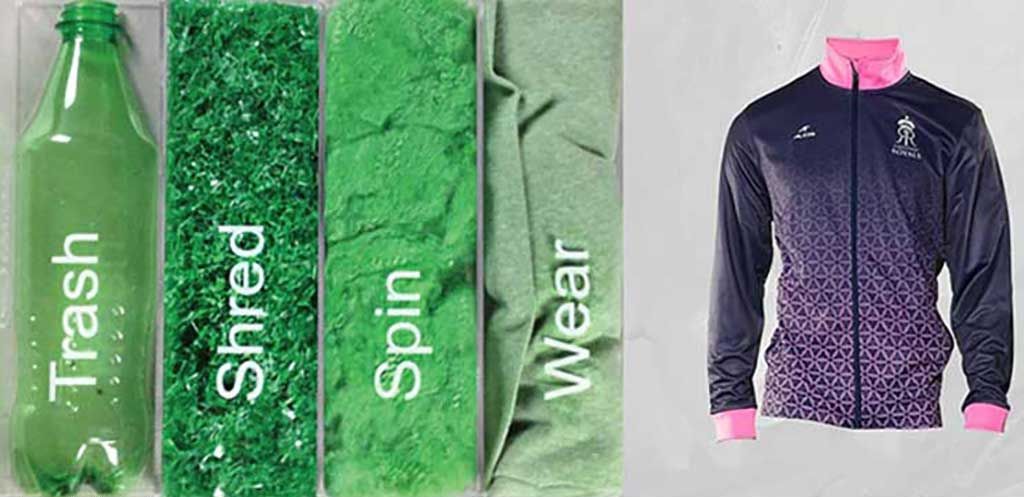
Image via justgowest.com
Recycled Plastics
There has been a big push towards recycled synthetic materials. To give this movement credit, this does remove a lot of single-use plastic from landfills and from the oceans especially when it is recycled into like products, but it does not remove the ‘microplastics in the water supply’ problem.
Washing garments made from any plastic including polyester, recycled or not, is the largest injector of microplastics in the water system. If you have garments made from synthetic materials in your wardrobe you do not need to stop washing and wearing but you should look into using a product called GuppyFriend. It is a washing bag that helps in two ways.
First, it protects the clothing within thus reducing the amount of fibers that break during the wash cycle. More than 700,000 are released in a single load of laundry. According to independent testing done by the German Textile Research Centre North-West, Fraunhofer Institute, and University of California at Santa Barbara, GuppyFriend reduces the amount of fiber breakage by 79-86%.
Additionally, the bag catches 90% of fibers and microfibers that do break off. These fibers catch in the corners of the bag that can be easily removed and disposed of. Air drying your synthetic clothing is important as well.
The current trend to ‘recycle’ water bottles into clothing is also stopping the current recycling loop of bottles being recycled into bottles or other items. Once a garment made from recycled plastics is discarded, it’s rarely recycled or recyclable so it goes into a landfill. Garments and accessories made from water bottles or plastic bags sound like they’re such a great environmental help but as the system currently stands they don’t generate enough of a long-term solution for those ’single-use’ plastics.
Instead, consider using fabrics like Econyl by Aquafil which is a regenerated nylon made from nylon waste from landfills and oceans. It can be recycled and regenerated over and over again. This makes it closed loop and infinitely sustainable. Stella McCartney, Adidas, and Speedo are already using this material.
Another fabric to look into is a Bio Performance Fabric by PrimaLoft, PrimaLoft Bio. It is designed to break down into materials found in nature, water, CO2, methane, biomass, and humus - a common, natural component of potting soil. It is a performance fabric and once the garment has reached its end-of-life the fibers break down at a highly accelerated rate in landfills, oceans, and wastewater.
Why or how does that work? It has been engineered to be more appetizing to naturally-occurring microbes in these environments.
Is Bamboo fabric sustainable? NO
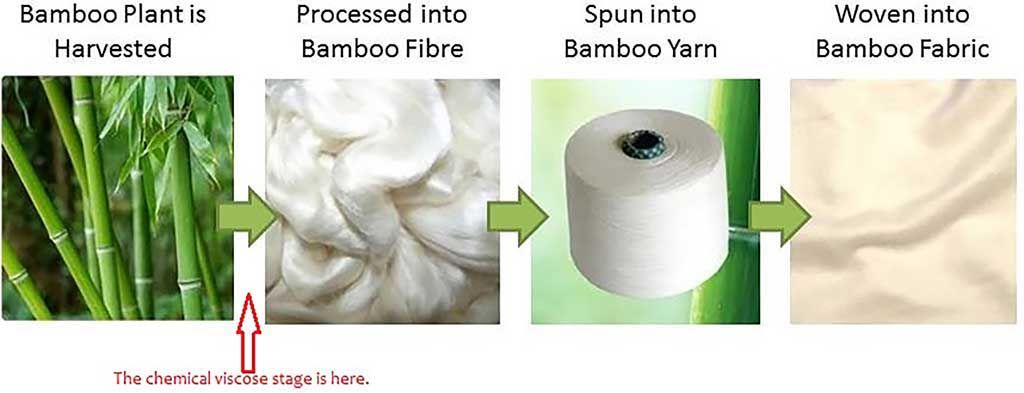
Image via ortohispania.com
Bamboo
At first glance, bamboo seems like the perfect resource for making textiles. It’s a grass that is extremely fast growing with a large root bed. It requires little to no fertilizers or pesticide, and is biodegradable. The plant itself is very renewable and may be an excellent carbon sink.
However there is a downside even to large scale growth of this ‘miracle’ plant. In places like China, naturally forested land has been clear-cut to farm bamboo. This destroys the natural environment and produces a monoculture that is devastating to the local insect and animal habits.
Worse, however, is the process required to turn the bamboo plant into a textile. Bamboo must be either mechanically or chemically broken down to dissolve the cellulose in the plant creating a mush. This mush is then mechanically combed and spun into a yarn.
The mechanical process involves crushing the plants and adding natural enzymes to break down the cell walls. Very little bamboo material is made this way because it is labor intensive and expensive.
According to the Water Footprint Network, water usage for viscose productions “varies significantly depending on the fiber type and the processes involved. In the production processes analyzed, the water footprint of viscose staple fiber is estimated at approximately 3,000 cubic meters per ton of yarn.
However, when produced through batch washing the footprint goes up to more than 30,000 cubic meters when produced through continuous washing due to higher demands for chemical inputs.” Compounding the problem, bamboo viscose is also produced in areas affected by significant water-scarcity.
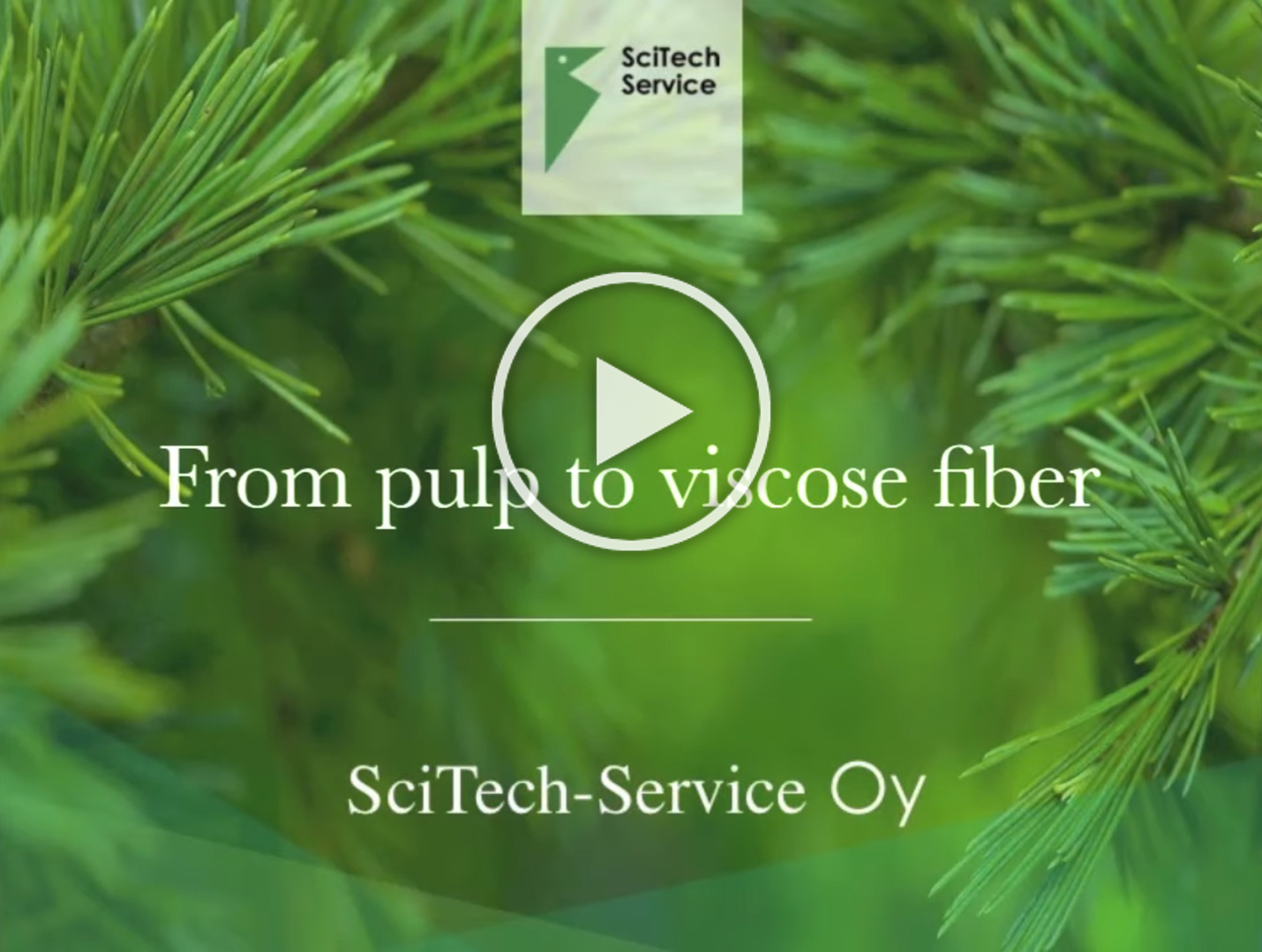
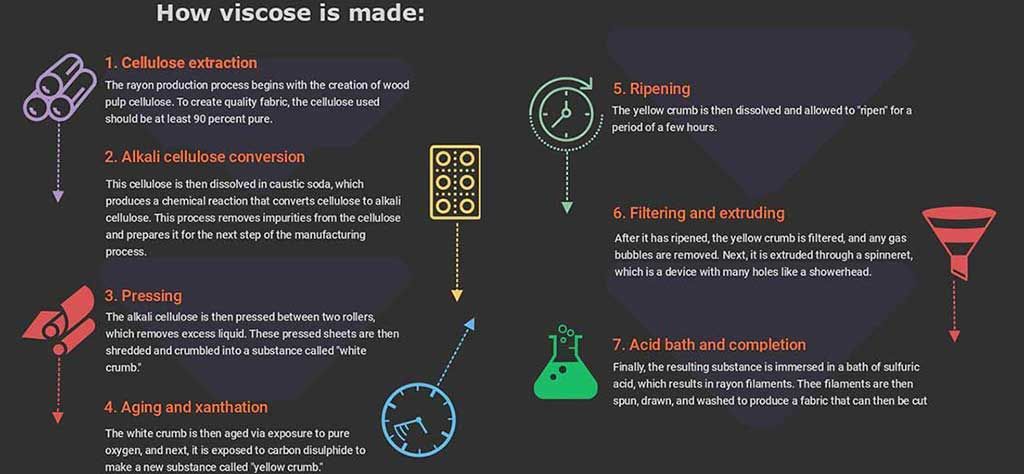
The chemical process is very similar to the production of rayon from wood or cotton. The viscose process is most common, and it uses hydrolysis alkalization with multi-phase bleaching. This uses toxic chemicals like sodium hydroxide (caustic soda or lye) and carbon disulfide to break the cell wall in a high pH environment.
The resulting mush is then extruded into a bath of sulphuric acid where it hardens into fine strands. After being washed and bleached, these strands form rayon yarn which can be dyed and woven. The yarn and resultant fabrics don't have any actual bamboo fiber left in them.
Simplified, the viscose process takes wood or bamboo and dissolves it into a pulp solution using lots of chemicals. It is then washed, cleaned, and bleached. It then goes through another treatment process to make it into fibers.
The chemicals used in each of these processes pollute the air and water around the manufacturing site. These chemicals are released into the environment after the chemicals (or contaminated water) are/is treated at some level before being pumped out.
While the chemicals can be reused across the production cycle, from my perspective this is a product that needs more research and improved production methods if you are looking for a sustainable environmentally friendly fabric. Consider other types of rayon, like modal, tencel, and lyocell, which are cleaner.
Products like tencel x REFIBRATM are transitioning the fashion industry into the ‘circular economy’ of the future, where nothing is treated as waste. Left overs from one process become inputs to another, thus keeping it circulating.
REFIBRATM technology gives a second life to what would be pre- and post-consumer waste. It is upcycled into brand new cellulosic fiber materials for clothing and home goods.
Design Knits is a family owned knitting mill based in Los Angeles specializing in designing and manufacturing knit fabrics for contemporary, athleisure, sportswear and loungewear. They use the latest fabrics and technologies, including tencel x REFIBRATM .
Misleading and misunderstood
Viscose
Not all viscose or rayon made from viscose comes from bamboo. Many types of wood can be made into viscose including beech, pine, eucalyptus.
About one third of the viscose in clothes comes from ancient or threatened forests and the process involves a huge amount of waste. As much as 70% of the harvested wood is dumped or incinerated.
As when using bamboo, many toxic chemicals are used in the manufacturing, processing, and finishing of textiles, and these chemicals often get dumped in rivers polluting the waterways for the locals.
There are ways to make viscose more sustainable. For example it can be sourced from sustainably managed forests, heat energy can be recovered during production, and manufacturing inputs can be optimized.
Forward thinking companies like Renewcell that developed Circulose, a product that is made from 100% textile waste, are working towards this goal. Circulose can be used to make viscose, lyocell, model, acetate, and other types of regenerated fibers.
Another company to look into is Sateri. Their product, Finex, is a circular viscose fiber that is made from a combination of recycled and post-consumer textile waste as well as wood pulp from renewable plantations.
According to the not-for-profit Canopy, it takes 2.5 - 3 tons of trees to create 1 ton of viscose pulp, but it takes only about 1 ton of recycled cotton or rayon to make 1 ton of viscose pulp.
Pros and Cons of Viscose
Cons
- Water waste in the production process
- Saturation of chemicals
- Destruction of local ecosystems
Pros
- Viscose fibers, once made, are infinitely recyclable
- Viscose can come from sustainably managed forests and bamboo plantations
- The material created is soft and long-lasting, as well as entirely biodegradable
There are some fabrics and raw materials that have inflated sustainability claims, but the news is not all bad. Even the chemical and water intensive viscose process can be done with recycled materials and energy reclamation.
Additional improvements to the process can make this a more environmentally friendly and the final products more sustainable. Domestic and global governments and regulatory agencies are cracking down on invalid sustainability claims as seen in the recent case where Dutch authorities fined H&M and DECATHLON FRANCE based on the greenwashing of some of their collections.
Is there any good news? YES
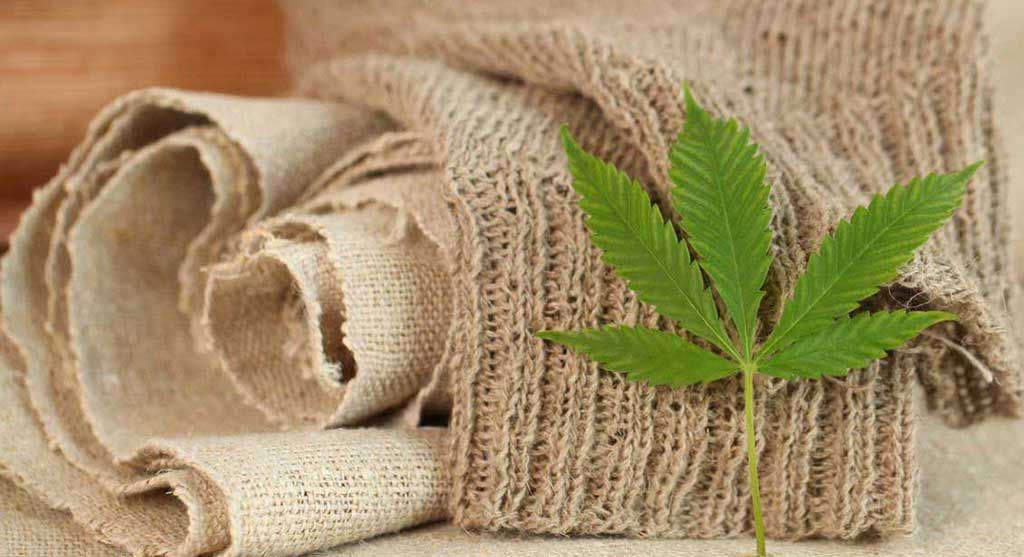
Image via foothemp.com
Organic Hemp
It is one of the most eco-friendly crops in the world. It is resistant to bugs. It grows quickly without the need for pesticides or fertilizers and matures in 11 weeks.
One of the best features is that it does not need much water to grow. Often, no additional irrigation is needed for hemp crops and the water needs are met by rainfall.
It also replenishes soil nutrients to help improve soil health. It’s a vigorous producer and produces 250% more fiber than cotton and 600% more fiber than flax on the same land.
Hemp has the highest yield per acre of any natural fiber. Hemp has been used worldwide for centuries but it’s been slow to take hold in fabric and textiles because it comes from the cannabis plant, the same plant that produces marijauna. While industrial hemp contains a mere 0.3 percent of THC, this association with marijuana has caused restricted production in the United States.
Recent pardons given to people arrested for simple use of marijuana and its legal status in many US states may mean that production restrictions will soon be lifted, however. As a raw material, organic hemp has many sustainable attributes, but harmful impact can come from chemical retting, bleaching, and other processes so it’s important to choose your supplier carefully.
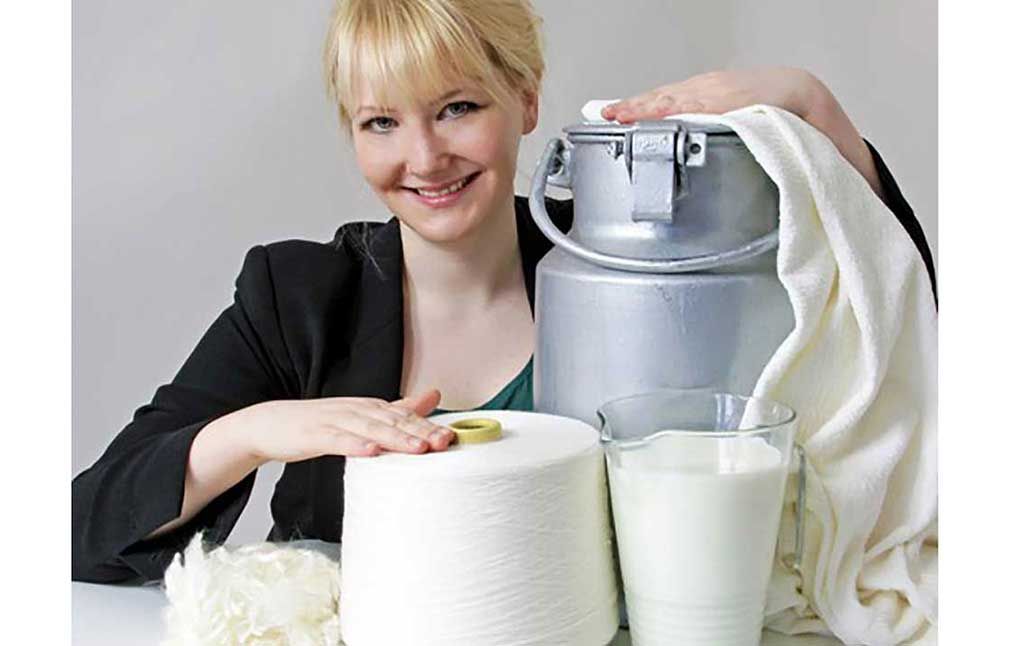
Image via texasfarmbureau.org
Milk silk
A German company has discovered an eco-friendly way of turning milk deemed unsafe for human consumption into high-end fashion. QMilch is a fabric made entirely of milk.
It was developed by microbiologist and fashion designer Anke Domaske, who uses the fabric for her fashion label Madamoiselle Chichi. The milk is allowed to ferment before it is turned into a powder, which is then heated and mixed with other natural ingredients.
The entire mixture is turned into yarn, which can be woven or knitted into a silk-like cloth. According to Domaske, the process only uses two liters of water to create one kilo (or 2.2 pounds) of material. These numbers don’t include water needed to produce the milk as it is made from a product that would be discarded, however.
Milk Silk is using a product that would otherwise go to a landfill (after the water is removed from the not-food-safe milk), dumped on farmland with manure, or poured into sanitary sewers where the water treatment plants will have to filter and clean this dairy product to make it into safe drinking water.
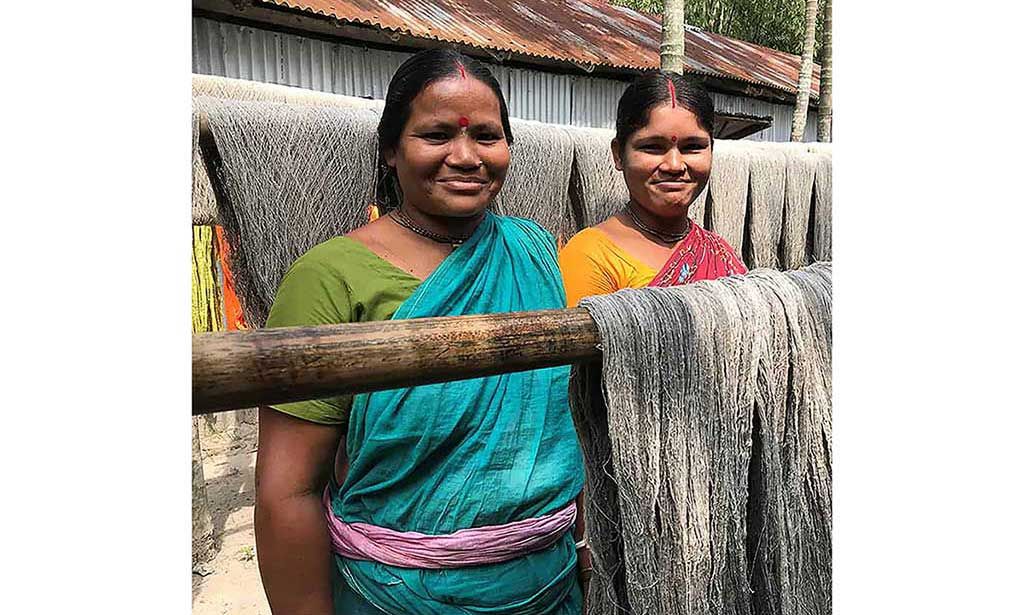
Image via motifhandmade.com
Recycled fabrics
In the US, only about 15% of textile waste is collected for recycling, and even less is transformed back into fiber. Globally that figure drops to under 1%.
Motif Handmade is a Begladeshi company that takes remnants from garment factories and recycles them into yarns that are handwoven into stunning zero-footprint yardage. All fabrics are made from cotton, jute, or other fibers indigenous to Bangladesh. The hand-weaving process uses no electricity. The recycled fibers are truly sustainable and remove garment waste from landfills.
Their fibers are either undyed or colored with natural dyes leaving no toxic chemicals. The yarns are skillfully handwoven by fair trade employees which means there is no exploitation. Transportation of materials to and from their factory is even done in vehicles fueled by eco-friendly compressed natural gas sourced in country.
Fashion Index is here to help you find genuine sustainable materials and resources that reinforce your message and speak to your mission. Find people and businesses working to support your vision. We support companies working to make fashion more sustainable at every stage in the supply chain.
Related articles:
Sustainability Throughout the Supply Chain: Creating a Greener Future in Fashion
Circular Fashion: Reducing Waste and Reimagining Sustainability
Sustainable Fashion Packaging: How Hydropol Solves the Plastic Waste Problem